
Southeast Sentinel Landscapes


About
Sentinel landscapes are areas where conservation, working lands, and national defense interests converge. As part of the Sentinel Landscapes Partnership, designated sentinel landscapes are supported by the DOW's Readiness and Environmental Protection Integration (REPI) Program, and complementary natural resource and conservation programs administered by the Department of Agriculture’s Natural Resource Conservation Service (NRCS) and Forest Service (USFS) and the Department of Interior’s U.S. Fish and Wildlife Service (USFWS). Coordination among these programs provides military installations and other sentinel landscape partners with essential tools to protect irreplaceable training areas supporting our warfighters. The SERPPAS Sentinel Landscape work group, more specifically, includes designated landscapes where local partners are working collaboratively to strengthen military readiness, conserve natural resources, bolster agricultural and forestry economies, increase public access to outdoor recreation, and enhance landscape resilience across the Southeast. The SERPPAS Sentinel Landscapes work group connects current and future designated sentinel landscapes to address shared challenges, share learned lessons, and promote landscape-scale efforts across sentinel landscapes in the Southeast.
Strategic Objectives
- Coordinate with the Office of Local Defense Community Cooperation (OLDCC) on promoting Compatible Land Use Planning efforts in the Southeast.
- Accelerate conservation of working lands through advocacy and support of greater funding for existing programs that acquire conservation easements over working landscapes.
- Encourage implementation of landowner engagement and outreach efforts across the sentinel landscapes to promote greater awareness of state and federal programs for landowners that advance sustainable land use practices and promote greater land conservation around military installations and ranges.
- Expand coordination and collaboration between all SERPPAS work groups to better integrate actions that complement and support regional efforts across the sentinel landscapes on Regional Species of Greatest Conservation Need (RSGCN), State Wildlife Action Plans, and wildlife corridors.
- Assist Sentinel Landscapes in the Southeast to assess their encroachment and hazard exposures and vulnerabilities and integrate resilience planning and adaptation into their landscape implementation.
- Use the SERPPAS network to share information, resources, and lessons learned from the designated Sentinel Landscapes to demonstrate the value and purpose of these partnerships supporting national defense.
Work Group Lead

Dr. Kathryn (Katy) Smith is a project manager at Texas A&M Natural Resources Institute on the Strategic Conservation Policy and Planning team. Katy is currently the Department of War (DoW) liaison for America’s Longleaf Restoration Initiative (ALRI), a collaborative restoration and conservation partnership, where she provides coordination for the needs of the partnership and assists in the development of strategic conservation planning for the restoration of longleaf pine ecosystems in the Southeastern U.S. Outside of ALRI, Katy helps develop innovative conservation strategies and regulatory solutions for complex threatened, endangered, and other at-risk species’ conservation challenges. A large focus of her work is to increase flexibility for military mission activities while simultaneously advancing conservation and recovery of species on both public and private lands.
Katy earned a Bachelor of Science in biology from the University of Central Arkansas and a Master of Science in wildlife and conservation from Texas A&M University-Commerce. She then completed her Doctorate in Wildlife and Fisheries Sciences from Texas A&M University in 2016. Katy originally began working for the Institute in 2008 as a graduate research assistant conducting research on black-capped vireo and golden-cheeked warbler ecology and conservation. Since then, she has worked for the Institute developing natural resource planning assistance for military installations, writing Species Status Assessments for the USFWS, and overseeing ESA-related conservation planning projects that have allowed her to integrate her ecology and policy background.
Katy currently lives in Arkansas with her daughter, Juniper. In her free time, she enjoys hiking with her dogs, birding, and promoting the building of a local library in her small community.

Bruce Beard (Co-Lead)
Associate Director of PolicyTexas A&M Natural Resources Institute
bruce.beard@ag.tamu.edu
Bruce Beard was the Texas A&M Natural Resources Institute’s Associate Director for Policy and led NRI’s Military Land Sustainability Program. Bruce brings more than 30 years of federal land management and natural resource policy experience to NRI and is a nationally recognized advocate for Sentinel Landscapes.
Bruce served within the Executive Office of the President at the Office of Management and Budget in three Administrations, where he was a principal advisor on federal land management and natural resource policy issues. He was the OMB Branch Chief for the Interior Branch responsible for coordination of budget, legislation and regulatory issues affecting the Department of the Interior. At the Department of Defense, he was instrumental in establishing the Readiness and Environmental Protection Integration (REPI) Program, which he directed, and helped to initiate the Sentinel Landscapes Partnership between the Departments of Agriculture, Defense and the Interior.
Bruce earned his Bachelor of Science in wildlife and fisheries from Texas A&M University, and a Master of Public Affairs in environmental policy from Indiana University’s School of Public and Environmental Affairs. He received the 2011 Outstanding Alumni Award from the College of Agriculture and Life Sciences at Texas A&M and the 2012 Secretary of Defense Medal for Meritorious Civilian Service at the Department of Defense.
Resources
Documents


News

See How The Southern Forest Network Connects
10/1/26
Keeping Forests has created a Network Explorer interactive map for partners from their 2023 Social Network Analysis (SNA) data. Keeping Forests asked 80 of its partner organizations to describe how they collaborate, critical issues driving their work, and the most available and needed resources to create impact.
Visit the SERPPAS News Archive
From Conflict to Collaboration: A Bulletproof Partnership
9/22/26
The Nature Conservancy released a YouTube video, From Conflict to Collaboration: A Bulletproof Partnership, which explores the relationship between the Red-cockaded Woodpecker (RCW) and Fort Bragg. As longleaf pine forests declined, the RCW found a new home within the longleaf pine ecosystem on the Fort Bragg landscape, where military training activities were taking place. At the time, the Army was not implementing the management practices necessary to support the species' recovery, and concerns about training impacts led to Fort Bragg receiving a federal jeopardy opinion from the U.S. Fish and Wildlife Service, which halted training activities to protect the RCW. The video highlights the importance of communication, trust, and understanding different perspectives when working toward shared goals.
Visit the SERPPAS News Archive
Endangered Species Act Toolbox: A Guide for Department of War Natural Resources Managers
9/1/26
The new Endangered Species Act (ESA) Toolbox acts as a guide for the Department of War Natural Resources Managers. The ESA Toolbox illustrates strategies and concepts that can support both conservation and mission activities, drawn from real-world examples.
Visit the SERPPAS News Archive
Sentinel Landscapes Partnership Success Stories
8/23/26
The Sentinel Landscape Partnership has released its new Sentinel Landscapes Partnership Success Stories StoryMap, which highlights examples of collaborative conservation and land-management projects across Sentinel Landscapes. It showcases how federal, state, local, and private partners work with willing landowners to protect working lands and natural resources, strengthen military readiness, support agricultural and forestry economies, and improve landscape resilience.
Visit the SERPPAS News Archive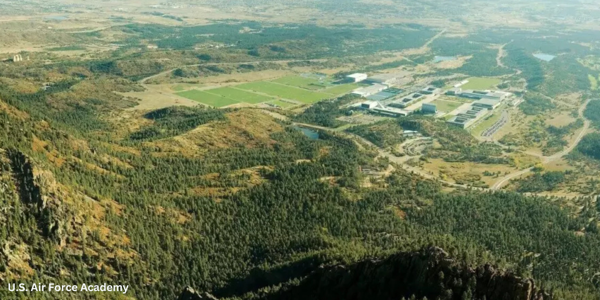
Two New Sentinel Landscapes Designated in Mississippi and Colorado
6/29/26
The Department of the Interior’s Fish and Wildlife Service helps ensure that wildlife habitat remains healthy and resilient in two newly designated Sentinel Landscapes in Mississippi and Colorado.
Visit the SERPPAS News Archive

Events & Webinars
- Nature-Based Solutions (NBS) Short Course
-
October 13 - November 12, 2026
Virtual - 80th Annual SEAFWA Conference
-
October 26 - 30, 2026
Nashville, TN - Installation Innovation Forum 2026
-
October 26 - 28, 2026
Tampa, FL - 16th Biennial Longleaf Conference
-
October 27 - 30, 2026
Williamsburg, VA - 2026 Annual Northwest Florida Sentinel Landscape Partnership Meeting Registration
-
November 19 - 20, 2026
Pensacola, FL - The Southern Group of State Foresters 2027 Annual Meeting
-
June 7 - 10, 2027
Stone Mountain, GA